Three scenarios for the S&P 500
The S&P 500 is down 12% YTD and more losses are likely before a bottom is in place. The extent of further decline will be a function of three variables; monetary policy, economic conditions and geopolitics. While these variables are, to a degree, correlated, policy is likely to be the predominant factor in the near future.
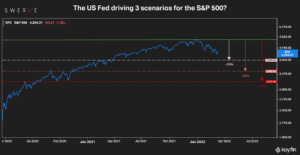
The S&P 500 is down 12% YTD and more losses are likely before a bottom is in place. The extent of further decline will be a function of three variables; monetary policy, economic conditions and geopolitics. While these variables are, to a degree, correlated, policy is likely to be the predominant factor in the near future. After all, the surge of equity prices over the last fifteen years was largely due to monetary largesse and what “Fed giveth, Fed taketh away”. Assuming no escalation in the Ukraine crisis, technical analysis points to three different scenarios for the S&P 500 implying, respectively, an 18%, 26% and 33% decline from last January’s ATH (see chart). The key issue is the balance that the Fed will strike between withdrawing liquidity and decelerating demand, keeping in mind that declining asset prices will also play a role in the latter because of negative wealth-effect. Before the crisis, the weight of the evidence was pointing to a more superficial tightening (scenario #1). Possibly 75-125 bps increase of the fed fund rate and somewhat less than the 150-200 bps the bond market is pricing in. Such a scenario is now in question as inflation is likely to accelerate and become far more politically toxic due to the Ukraine war. The Fed may therefore decide to “sacrifice” asset prices (hence scenarios #2 or #3) to protect the approximately 40% of US households that have no assets and are more exposed to the ravages of rising prices. Inflation changed everything and for the first time since 2008 investors are facing a world where the Fed may have a more pressing priority than “saving” the market. But then again, as often opined on these posts, the large amount of global debt outstanding imply that a more severe tightening may jeopardize financial stability. On balance, this time the risk of more decisive action and deeper decline in equity prices, appears to be at least as likely as the alternative. Hence at least a 50% probability that the market may suffer another 10-20% decline from the current levels. Investors may want to reassess their portfolios’ risk profile and make sure they have a critical mass of their assets playing “defense”, e.g. liquidity, store of value etc. To put it like Abraham Lincoln: “the dogmas of the quiet past are inadequate to the stormy present”. (Disclosure: Hold all assets mentioned. Not investment advice. Do your own research)