Are We There Yet? Not according to the VIX
VIX is currently at 26.7 and far from the level that would signal a final capitulation. There seems to be way too much complacency in equities at the moment. Why such a lack of fear?
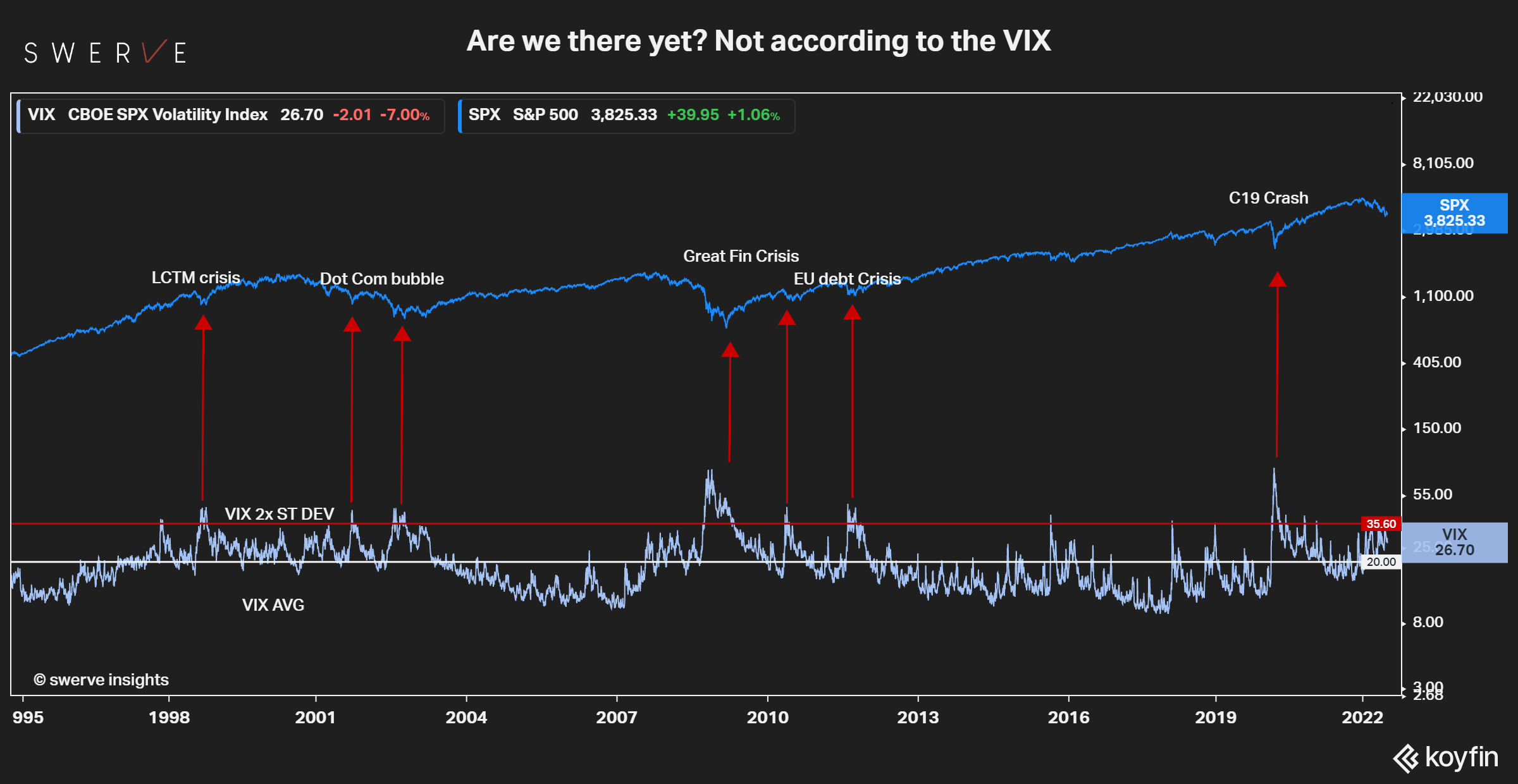
The #vix , aka “the fear index”, measures the premium in the option markets. Akin to insurance, the higher the premium, the higher the risk. The VIX is typically be inversely correlated to #equities and, in fact, major bottoms in equities are always associated with very elevated VIX readings. Typically at least 2 standard deviations above the average (see chart).
VIX is currently at 26.7 and far from the level that would signal a final capitulation. None of the past five #bearmarkets this century has bottomed below 42. Furthermore major troughs are also characterized by protracted periods with elevated volatility. The average VIX leading to the bottom of those bear markets was 46 in the 20 previous sessions and 51 for the previous 10.
There seems to be way too much complacency in equities at the moment. Why such a lack of fear? First off, corporate earnings are still rather robust in spite of the economic slowdown. More important perhaps is the recency bias; as investors have become accustomed to more than a decade of multiple expansion, #buythedip has become almost a pavlovian response.
Monetary tightening, the driver of the current market repricing, is unlikely to end until either inflation is under control, the economy is in danger of deep recession or credit markets break down. While the first condition is unlikely to manifest any time soon, the last two could be much closer. Regardless, equity markets appear to be destined for more pain, likely in the weeks/months ahead as earnings start to cave in. After all, 43% of the occurrences of VIX above 2x standard deviation are recorded between July and October, so while markets may have another 8-15% leg down, a significant bottom may not be too far away. Disclosure: Hold all assets mentioned. Not investment advice. Do your own research.
#investing #markets #portfoliomanagement